Share this article
For more judgments and legal updates, follow our WhatsApp channel.
Independently written and published by Shahbaz Shah Legal Journal.
Case reference
Federation v. Aisha Steel Mills and connected cases
- Case number
- C.As. 567–569/2011 and F.C.P.L.A. 1576/2026
- Court
- Federal Constitutional Court of Pakistan
- Decided
- 23 November 2026
- Uploaded
- 24 November 2026
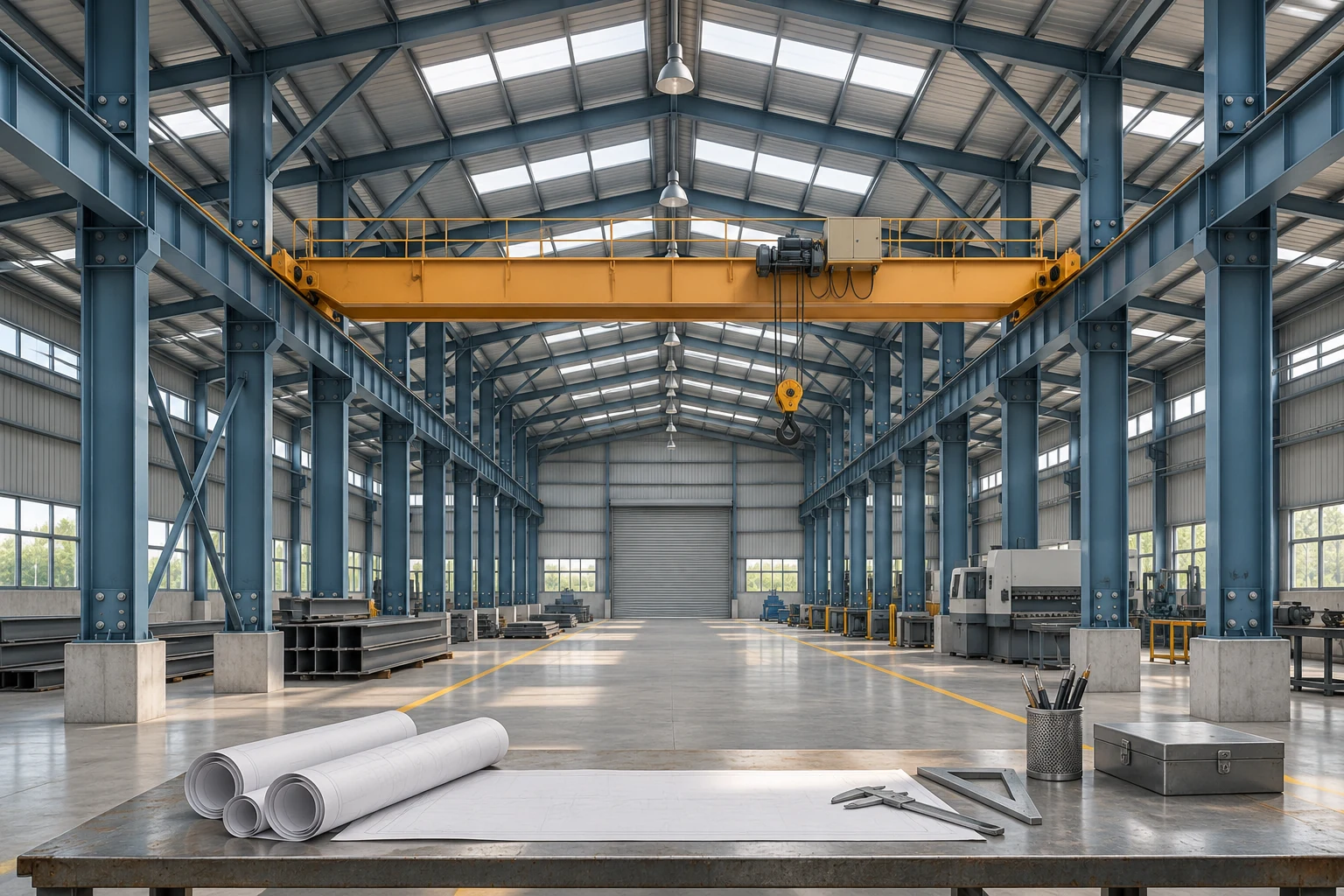
An overhead crane can depend on the steel frame of a factory even when the frame has no mechanical connection to the production line. In a judgment announced on 23 November and uploaded the next day, the Federal Constitutional Court held that a prefabricated structure’s function can bring it within the definitions of plant, capital goods or capital equipment. The Court dismissed three revenue appeals and allowed a connected appeal by Orient Material. Paragraphs 6–7 and paragraphs 14–15.
How the cases reached the FCC
The appeals arose from two sets of imports governed by different provisions. In the Sindh cases, the High Court had accepted claims for a concession under Serial No. 21 of S.R.O. 575(I)/2006. Aisha Steel’s case involved a steel rolling mill at Bin Qasim. The pre-engineered structure at issue in Huffaz’s case included arrangements to support cranes. The Supreme Court appeals were transferred to the FCC following the Twenty-seventh Amendment. Paragraphs 1–2 and paragraph 7.
Orient Material imported a prefabricated steel structure for its ceramic unit in the Faisalabad Special Economic Zone. It claimed an exemption under PCT heading 9917(2). After a judicial remand, the FBR rejected the claim on 7 October 2022 because the structure lacked a mechanical link to the production machinery. The Lahore High Court upheld that decision in May 2026. Paragraphs 1–2.
How the Court tests industrial function
The Court directed attention to the structure’s design, operational purpose, relationship to installed equipment and enduring industrial use. A structure may perform a supporting, protective or operational function without a physical connection to machinery. A building used as ordinary accommodation in an industrial unit or a special economic zone remains outside the holding. And the importer still bears the burden of establishing eligibility under the applicable provision. Paragraphs 4–6, paragraph 9 and paragraph 14.
The tariff heading and entitlement to a concession are separate questions. A prefabricated building can retain its classification under heading 94.06 and still qualify as capital goods under S.R.O. 575(I)/2006. The notification can reach goods outside machinery Chapters 84 and 85, and its separate entry for prefabricated buildings and sheds leaves Serial No. 21 available where its own conditions are met. For the 2008 notifications relaxing the local-manufacture condition, the governing date is the statutory date under Section 30 or, where applicable, Section 30A of the Customs Act. An earlier contract or letter of credit does not make application of a notification already in force on that statutory date retrospective. Paragraphs 5–7.
Why Orient Material succeeded
The FCC read heading 9917(2) with the definition of capital goods in Part I of the Customs Act’s Fifth Schedule and the applicable version of Section 37(a) of the Special Economic Zones Act, 2012. It held that approval under Section 34(2) concerns additional benefits. A claim to an existing statutory exemption remains subject to any Board of Investment verification required by law. The Court also considered S.R.O. 41(I)/2009 independently. Its separate categories of plant, machinery, equipment and accessories retain their own meaning, and its local-manufacture, certification, project and removal conditions remain enforceable. Paragraphs 8–10.
Whether equipment performs an industrial function may call for technical assessment. Whether a law imposes mechanical linkage is a question of interpretation for the court. Here the FCC found that the FBR applied the wrong legal test and failed to address material grounds. It held that the circumstances justified Article 199 review and that Section 24A of the General Clauses Act required a reasoned determination. The bench left open whether the officer who made the decision had been validly authorised. Paragraphs 11–13.
The orders the Court made
The Sindh High Court judgment stands. In Orient’s case, the FCC set aside the Lahore High Court judgment and FBR’s 2022 order. It declared two FBR memorandums from 2021 unlawful to the extent they categorically excluded qualifying structures or required mechanical linkage. It directed release of any securities retained in connection with the disputed demands. Paragraph 15.
Sources
Official FCC judgment · FCC judgment register.
Frequently asked questions
Can a prefabricated factory building qualify for customs relief?
Yes, if the importer shows that the structure serves a qualifying industrial function and meets the conditions of the applicable law. Its location in a factory or SEZ alone is insufficient. Paragraph 14.
Does classification under heading 94.06 bar a concession?
No. The tariff classification of a prefabricated structure can remain under heading 94.06 even where the structure qualifies as capital goods under the applicable concession. Paragraph 5.
Can FBR require a physical connection to production machinery?
Only if the governing legislation or notification makes such a connection a condition. The FCC found no such requirement in the provisions before it. Paragraphs 9–11.
Does an SEZ enterprise need approval under Section 34(2)?
Section 34(2) concerns additional benefits. For the existing statutory exemption at issue, the prescribed conditions and any legally required Board of Investment verification still apply. Paragraph 8.
New judgment alerts
Follow this court or legal topic
Receive new judgments and analysis about Federal Constitutional Court of Pakistan, Commercial Law by email.
Primary-source materials
Verify the underlying law and record
Court documents, statutory provisions, official notifications, government documents, and external official sources relied on or relevant to this article.
FCC Rules Prefabricated Factory Structures Can Qualify for Customs Relief
fcc-prefabricated-factory-structures-customs-exemption.pdf · PDF · 563 KB
Federation of Pakistan and others v. Aisha Steel Mills Limited, and connected Huffaz and Orient Material cases
fcc-aisha-steel-huffaz-orient-material-ca-567-2011-connected.pdf · PDF · 172 KB
Official Federal Constitutional Court judgment
FCC judgment register, uploaded 24 November 2026
Research integrity
Editorial and source record
- Author
- Shahbaz Shah, Advocate High Court
- Source review
- Checked against the complete judgment
- Sources checked
- November 24, 2026
- Primary materials
- 4 recorded on this page
- Corrections
- No material correction note is recorded.
Independent legal journal
Written and published by Shahbaz Shah
This article forms part of an independent journal focused on practical analysis of Pakistani law, courts, and legal institutions.
About the authorReader feedback
Was this analysis useful?
Choose one response and, if you wish, tell us what should be improved. No name or email is required. See the Privacy Policy.