Share this article
For more judgments and legal updates, follow our WhatsApp channel.
Independently written and published by Shahbaz Shah Legal Journal.
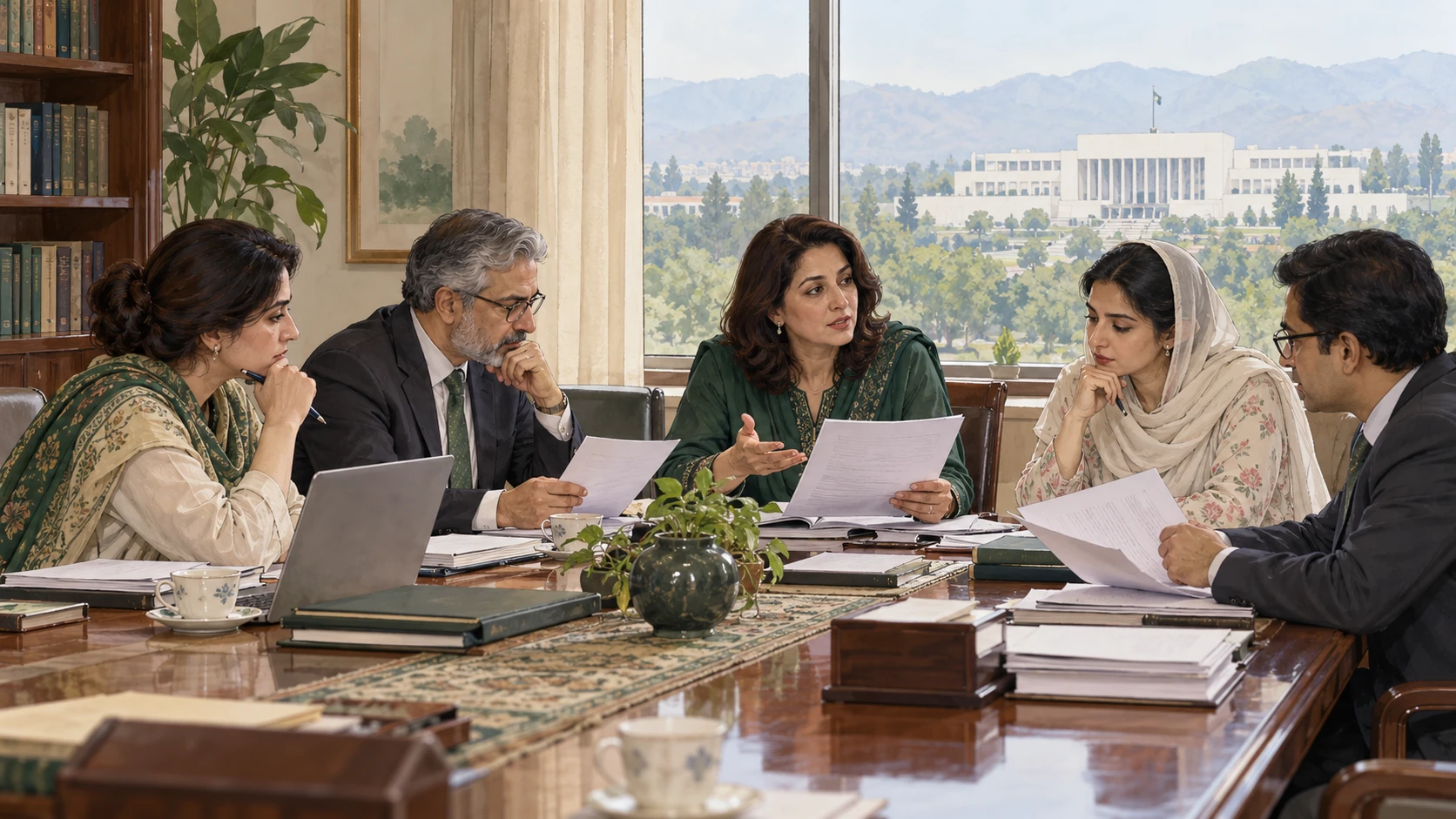
Pakistan’s Parliament has recorded the passage of four amendment bills concerning the Higher Education Commission and three federal institutions, taking forward a legislative programme linked to women’s participation in institutional decision-making.
The Senate’s passed-bills register lists approval on 29 October 2026. The National Assembly’s register records passage of the same four measures on 30 October.
As of 31 October, presidential assent and the amendments’ commencement have not been independently confirmed. The verified development is their passage in both Houses.
The four bills and their passage dates
| Amendment bill | Senate | National Assembly |
|---|---|---|
| Higher Education Commission (Amendment) Bill, 2026 | 29 October 2026 | 30 October 2026 |
| NFC Institute of Engineering and Technology Multan (Amendment) Bill, 2026 | 29 October 2026 | 30 October 2026 |
| National Textile University (Amendment) Bill, 2026 | 29 October 2026 | 30 October 2026 |
| National Rehmatul-lil-Aalameen Wa Khatamun Nabiyyin Authority (Amendment) Bill, 2026 | 29 October 2026 | 30 October 2026 |
Sources: Senate and National Assembly passage registers. The Houses use slightly different English spellings for the Authority’s name; the table follows the National Assembly entry.
The final passed texts were unavailable for independent review at publication. The committee proposals described below therefore remain distinct from confirmed provisions of the final law. The authenticated texts and parliamentary messages will also establish whether any amendments require further concurrence.
Women’s representation: the policy behind the package
At its 18 May meeting, the Senate education committee linked the reforms to a federal objective of 33 per cent women’s representation across boards, statutory bodies, universities and related committees. It also examined changes to administrative authority.
That policy objective does not establish an identical quota in every provision. The legal requirements for each body depend on the wording Parliament finally approves.
HEC: attention turns to the Commission’s membership
The committee’s 16 April statement records concern about the HEC’s gender balance. Officials described a composition of five men and two women; the committee recorded agreement on restructuring it to four men and three women.
That account explains the committee’s approach. It does not, by itself, establish the membership formula in the bill passed in October. The enacted wording will determine the legal requirement.
For students and universities, the records examined do not establish a new rule on admissions, fees, scholarships or degree attestation. Those matters should not be inferred from passage of a governance amendment.
NFC Multan: representation and administrative arrangements
The May committee briefing discussed the institute’s governing Senate, ministerial representation and proposed changes to senior institutional roles. It also described a proposed new name for the institute.
Those were committee-stage proposals. Passage under the NFC amendment bill’s title does not itself confirm a renaming or the final allocation of powers.
National Textile University: participation in university governance
The same committee statement connected the university amendments with women’s representation in its Senate and teaching faculty. The final text is needed to identify the particular seats and appointments affected.
Rehmatul-lil-Aalameen Authority: representation and decision-makers
For the Authority, the committee examined women’s representation and proposals to replace statutory references to the Federal Government with appropriate authorities. The final wording will identify the decision-maker for each affected power.
Passage, assent and commencement are separate questions
Article 75 of the Constitution sets out the presidential stage. Clause (1) requires action within ten days of presentation: assent, or return of a non-Money Bill for reconsideration.
Clause (2) provides for a returned bill to be reconsidered in a joint sitting. If passed again and presented to the President, assent must follow within ten days; otherwise it is deemed given. Clause (3) makes a bill law upon assent or constitutionally recognised deemed assent.
The ten-day period should therefore not be calculated simply from the dates of passage in the table. Presentation to the President and the relevant constitutional stage matter.
The commencement provision must then be checked to establish when an amendment operates. Gazette publication supplies the authoritative published text; it should not be confused with assent itself.
The Senate’s Acts register, checked on 31 October, did not identify these four measures as Acts. A missing register entry is not conclusive proof that assent has not occurred. The accurate position for this report is that assent and commencement remain unverified.
What the final laws will need to settle
For the institutions, the practical questions go beyond the policy percentage:
- Which membership categories must include women, and in what numbers?
- Who nominates or appoints those members?
- Are any powers reassigned between the government, a ministry and institutional office-holders?
- How are existing appointments and governing bodies treated?
- What commencement date or notification governs the changes?
The passage records establish a new parliamentary development. The authenticated laws will determine its practical effect on institutional governance.
Related coverage: National Assembly’s earlier amendment bills on federal powers and women’s representation. For the constitutional framework, see the Constitution of Pakistan and official PDF.
Frequently asked questions
Which four bills have passed both Houses?
The 2026 amendment bills concerning the Higher Education Commission, NFC Institute of Engineering and Technology Multan, National Textile University, and National Rehmatul-lil-Aalameen Wa Khatamun Nabiyyin Authority. The Senate records passage on 29 October and the National Assembly on 30 October 2026.
Have these bills become enforceable law?
Presidential assent and commencement have not been independently confirmed as of 31 October 2026. Passage by both Houses establishes a parliamentary stage; it does not alone establish that the amendments are operative.
Does each bill impose a blanket 33 per cent quota?
The committee identified a wider 33 per cent policy objective. The precise requirements for each institution must be established from the final statutory wording.
Does the HEC bill immediately change admissions or degree attestation?
The sources examined do not establish a new rule on admissions, fees, scholarships or degree attestation. Any claimed change needs support in the final law and its commencement provision.
What should institutions check next?
The authenticated text, any further concurrence required after amendments, the assent record, the commencement clause, and provisions governing appointments or existing bodies.
New judgment alerts
Follow this court or legal topic
Receive new judgments and analysis about Constitutional Law, Human Rights by email.
Primary-source materials
Verify the underlying law and record
Court documents, statutory provisions, official notifications, government documents, and external official sources relied on or relevant to this article.
Senate of Pakistan — passed-bills register, four entries dated 29 October 2026
National Assembly — passed-bills register, four entries dated 30 October 2026
Senate education committee — official statement, 18 May 2026
Senate education committee — official statement, 16 April 2026
Senate of Pakistan — Acts register, checked 31 October 2026
Constitution of Pakistan — Article 75, National Assembly Fourteenth Edition, 2025, printed page 45
Research integrity
Editorial and source record
- Author
- Shahbaz Shah, Advocate High Court
- Legal review
- Author-reviewed
- Sources checked
- October 31, 2026
- Primary materials
- 6 recorded on this page
- Corrections
- No material correction note is recorded.
Independent legal journal
Written and published by Shahbaz Shah
This article forms part of an independent journal focused on practical analysis of Pakistani law, courts, and legal institutions.
About the authorReader feedback
Was this analysis useful?
Choose one response and, if you wish, tell us what should be improved. No name or email is required. See the Privacy Policy.