Share this article
For more judgments and legal updates, follow our WhatsApp channel.
Independently written and published by Shahbaz Shah Legal Journal.
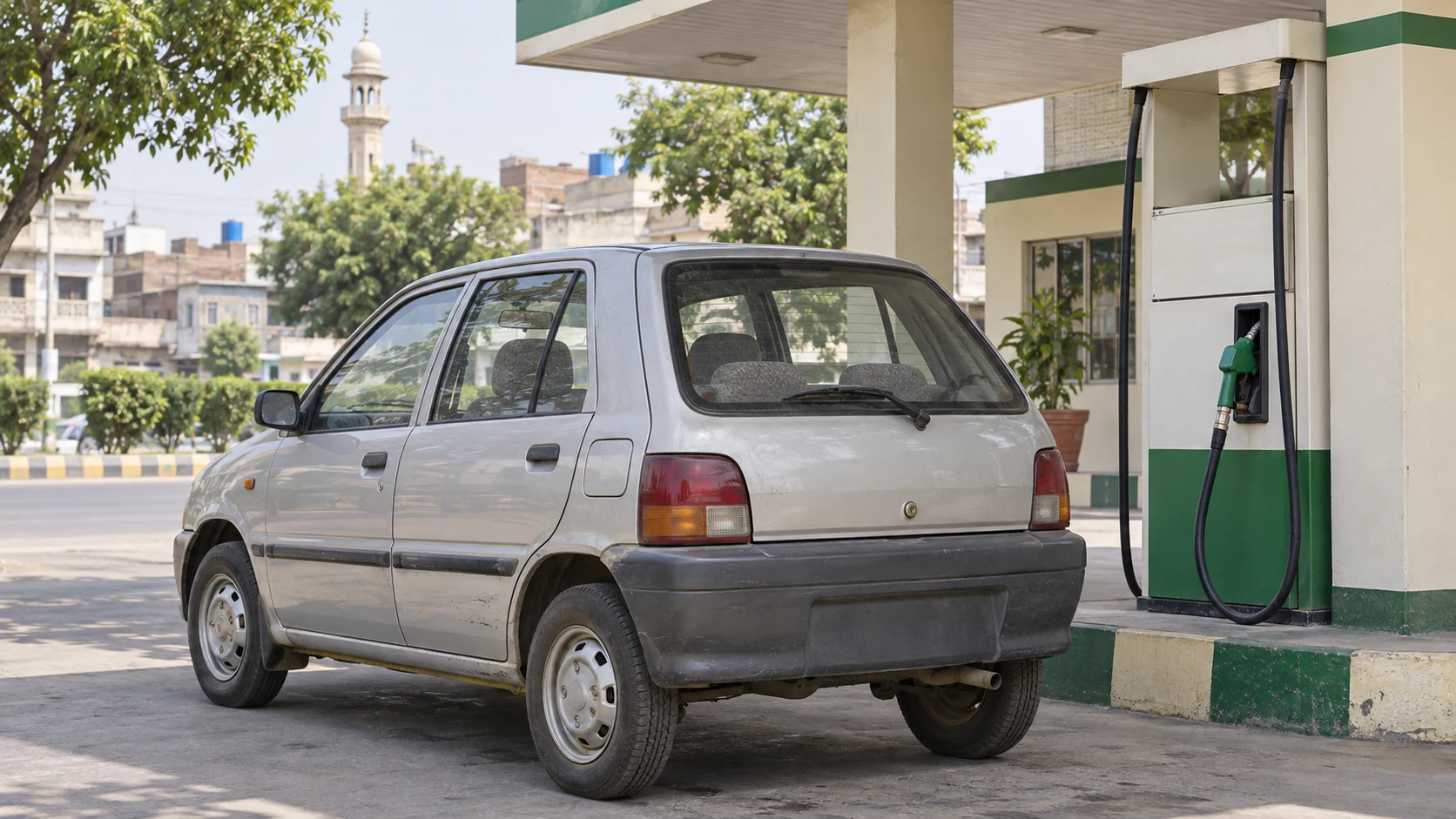
The Prime Minister’s Fuel Relief Scheme excludes small cars registered before 1 January 2006. For families who keep an older car because that is what they can afford, the cutoff raises a question under Article 25 of the Constitution.
Picture two households with similar incomes driving the same model of small hatchback. Both rely on their cars for work and school runs. One car was registered in December 2005, the other in January 2006. Under the published rules, only the second car passes the date requirement. If its owner meets the other conditions and uses the full allowance, the difference can be worth Rs3,000 a month. Published eligibility rules · ECC approval and subsidy amount
What does a registration date tell us about need?
The Economic Coordination Committee described the package as targeted relief for lower-income groups facing higher petroleum prices. For a lower-middle-income family, keeping an older car running may cost less than replacing it. A salaried worker who uses a small car every day can face the same fuel bill as someone driving a similar car registered a few weeks later. The date on the excise record tells us when the vehicle entered the register. It tells us little about what the family earns or how much of its budget goes to petrol. ECC statement on the purpose of the scheme
The rule can therefore work against its own purpose. A better-off household may pass the date requirement with a newer small car. A household with less room in its budget may fail it even though its car meets the same 800cc limit. The government’s launch explanation sets out the date without explaining why owners on either side should be treated differently. Ministry of IT announcement
How Article 25 applies
Article 25(1) guarantees equality before the law and equal protection of the law. In I.A. Sherwani v. Government of Pakistan (1991 SCMR 1041), the Supreme Court explained that the government can treat groups differently when there is an intelligible basis for the distinction and a rational connection between that distinction and the objective. The Federal Constitutional Court reaffirmed the test in its super tax judgment and recognised the latitude available in fiscal matters. Constitution of Pakistan, Article 25 · Federal Constitutional Court, D.G. Khan Cement, paras 68–69
Here, the two groups being compared are owners of otherwise eligible small petrol cars who face similar costs. The registration date makes those groups easy to identify. The constitutional question is what that date has to do with the purpose of helping households absorb the rise in petrol prices. If the government cannot show that connection, or a sound reason tied to the scheme’s administration, the exclusion is vulnerable under Article 25.
What the government should explain
The government may have a practical reason. Older excise records could be harder to verify, or extending eligibility could cost more than the scheme can cover. Those explanations need evidence. How many otherwise eligible cars does the rule exclude? Is there a documented break in the availability of reliable records at the start of 2006? What would it cost to admit older cars whose registrations can be confirmed?
The scheme already verifies vehicle details against official records. If the difficulty is verifying some older registrations, the government could allow owners to confirm those records through the excise department. If the difficulty is the budget, a clear income or hardship criterion would address financial need more directly. The government should publish the reason for the date and review the restriction if it cannot support it. Families who can prove ownership of an otherwise eligible small car deserve a rule that takes account of the relief the scheme was designed to provide. Official registration and verification guidance
Frequently asked questions
Which cars does the cutoff exclude?
Under the published terms, a petrol car of up to 800cc must have been registered on or after 1 January 2006. The condition turns on the vehicle’s registration date. Official eligibility guidance
How much relief is available for an eligible small car?
The approved discount is Rs100 per litre on up to 30 litres a month, worth up to Rs3,000 when the full allowance is used. ECC approval
Does Article 25 give everyone a right to subsidised petrol?
Article 25 protects equality before the law and equal protection of the law. It allows the government to target public relief using criteria with a rational connection to the scheme’s purpose. Constitution of Pakistan, Article 25 · Federal Constitutional Court, para 68
What change would address the equality concern?
Let owners of older small cars establish eligibility through a valid, verifiable registration. If funds are limited, prioritise households using criteria related to financial need.
New judgment alerts
Follow this court or legal topic
Receive new judgments and analysis about Constitutional Law by email.
Primary-source materials
Verify the underlying law and record
Court documents, statutory provisions, official notifications, government documents, and external official sources relied on or relevant to this article.
Why Pakistan’s Petrol Subsidy Cutoff for Older Cars Is Hard to Defend
pakistan-petrol-subsidy-2006-cutoff-article-25.pdf · PDF · 458 KB
Ministry of IT and Telecommunication, Prime Minister’s Special Relief Scheme
Economic Coordination Committee approval of the Fuel Relief Package
Constitution of Pakistan, Article 25
Federal Constitutional Court, D.G. Khan Cement, paragraphs 68–69
Official Fuel Relief Scheme eligibility and verification guidance
Research integrity
Editorial and source record
- Author
- Shahbaz Shah, Advocate High Court
- Source review
- Checked against the published scheme, Constitution and case law
- Sources checked
- November 21, 2026
- Primary materials
- 6 recorded on this page
- Corrections
- No material correction note is recorded.
Independent legal journal
Written and published by Shahbaz Shah
This article forms part of an independent journal focused on practical analysis of Pakistani law, courts, and legal institutions.
About the authorReader feedback
Was this analysis useful?
Choose one response and, if you wish, tell us what should be improved. No name or email is required. See the Privacy Policy.