Share this article
For more judgments and legal updates, follow our WhatsApp channel.
Independently written and published by Shahbaz Shah Legal Journal.
Case reference
Mst. Arshi v. Mst. Nissa Farhan Memon
- Reference
- Civil Petition 4906/2025 · 5 August 2026
- Bench
- Muhammad Ali Mazhar and Irfan Saadat Khan JJ.
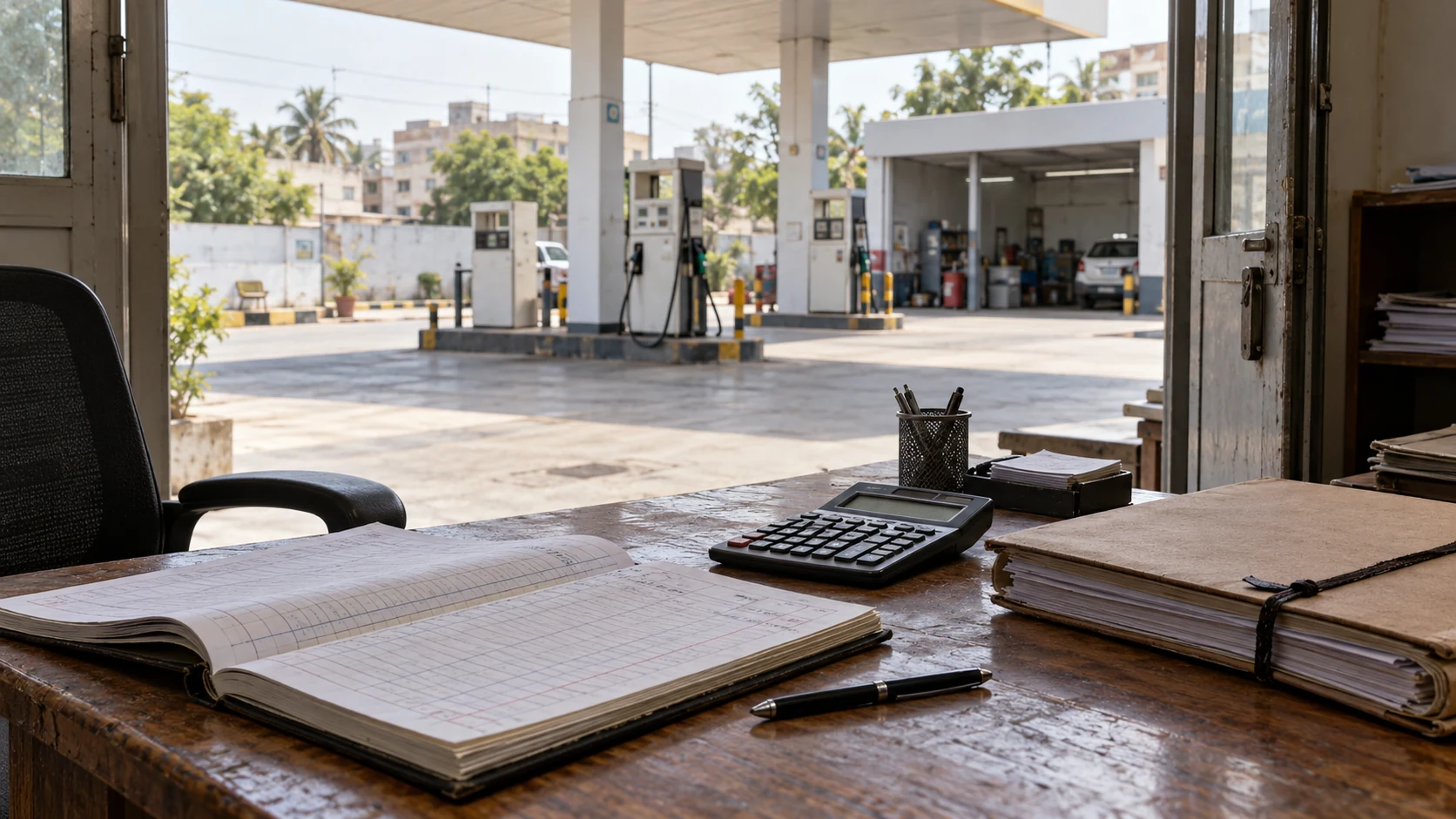
The Supreme Court of Pakistan explained that appointing a receiver demands a stronger basis than the showing needed for a temporary injunction. In a dispute over a Hyderabad petrol-pump business, it set aside both the appellate court’s conditional operating arrangement and the Sindh High Court’s receivership order, restoring the injunction appeal for a fresh decision. Judgment, paragraphs 7–12.
The decision is Mst. Arshi and another v. Mst. Nissa Farhan Memon and others, Civil Petition No. 4906 of 2025, decided on 5 August 2026. Justice Muhammad Ali Mazhar wrote the judgment for a bench comprising him and Justice Irfan Saadat Khan. The case concerns the limits of interim protection, the distinct requirements for a receiver and the supervisory scope of Section 115 of the Code of Civil Procedure, 1908. Judgment, case heading and paragraphs 8–11.
The outcome was a remand of the interim appeal. The Supreme Court did not finally determine the inheritance shares, grant permanent control of the dealership to either side, or decide the underlying declaration suit. It directed status quo subject to verifiable accounts while the restored appeal was reconsidered. Judgment, paragraph 12.
How an injunction appeal became a receivership dispute
The petitioners filed Civil Suit No. 129/2025 for declaration and permanent injunction before the VIIth Senior Civil Judge, Hyderabad. Their temporary-injunction application under Order XXXIX Rules 1 and 2 CPC was refused on 30 May 2025. They appealed under Order XLIII Rule 1 read with Section 104 CPC. Judgment, paragraph 2.
On 5 August 2025, the Additional District Judge allowed the appeal and directed Pakistan State Oil to de-seal the pump site and refrain from disturbing the dealership for six months or until the suit was decided, whichever came first. That arrangement included deposit of a 29.17% share of gross commission or savings with the trial court’s Nazir, operation of the business by petitioner No. 1, and submission of supply and commission accounts by PSO. These were the terms of the appellate order later set aside, not the Supreme Court’s final award of a share. Judgment, paragraph 2.
The respondent challenged that order in Civil Revision No. 130/2025. On 20 October 2025, the Sindh High Court set it aside and directed the trial court’s Nazir to take charge as receiver of Kohinoor Petroleum Service, Hyderabad, under specified terms of reference. It considered that the appellate court had exceeded its authority by tentatively determining heirs’ shares and allowing one party to continue operating the dealership. Judgment, paragraph 3.
Before the Supreme Court, the petitioners objected that no application for a receiver had been made and that the High Court had gone beyond the injunction issue and Section 115 CPC. The respondent defended the receivership and asserted a larger inheritance share of approximately 58.33%. These were competing submissions. The Supreme Court found that neither intermediate court had properly addressed the real controversy and that their divergent orders required reconsideration. Judgment, paragraphs 4–7.
Temporary injunction: three conditions must coexist
Paragraph 8 identifies the familiar requirements for temporary relief under Order XXXIX Rules 1 and 2. The court must examine all three, in the circumstances of the particular dispute. Judgment, paragraph 8.
- A prima facie case: the applicant must show a legal right and a fair prospect of succeeding.
- Balance of convenience: the court compares the likely hardship to the applicant if relief is refused with the likely hardship to the opposing party if it is granted.
- Irreparable injury: the threatened harm must be of a kind that cannot adequately be remedied by monetary compensation.
The Court’s discussion makes the inquiry practical. A judge must assess the competing harm on the actual record. A bare assertion of inconvenience is not the comparison the judgment describes, and a claim capable of adequate compensation may fail the irreparable-injury requirement. Judgment, paragraph 8.
The same paragraph reproduces an earlier Sindh High Court discussion of equitable relief in Sayyid Yousaf Husain v. Pakistan Defence Officers’ Housing Authority, 2010 MLD 1267. Its relevance here is the Supreme Court’s use of that passage on rights, comparative hardship, non-monetary injury and fair dealing. The analysis of the present decision rests on the complete Arshi judgment. Judgment, paragraph 8.
A receiver requires stronger grounds for taking control
The Court treated receivership under Order XL Rule 1 CPC as an exceptional remedy. It can place disputed property under court-controlled possession or management. That interference requires persuasive grounds supported by affidavit or documentary evidence. Judgment, paragraph 9.
The purpose is to protect, manage and preserve property facing a real danger of waste, dissipation, damage, alienation or loss. The words just and convenient require fairness to both parties and an effective means of preserving the property for whoever ultimately succeeds. Convenience to only one litigant is insufficient. Judgment, paragraphs 9–10.
Paragraph 10 draws the important distinction. For an injunction, a fair question about the existence of the asserted right may satisfy the prima facie component, alongside the other injunction requirements. For a receiver, the applicant must make out a good prima facie title and persuasive reasons for placing the property in judicial custody. The Court also stresses honesty, the seriousness of the threat and the disruption that receivership would cause. Judgment, paragraph 10.
This is why the existence of a family business dispute does not, by itself, answer the receivership question. The required inquiry concerns the right claimed, the proved danger to the property and whether taking control is justified. The Supreme Court required those questions to be addressed on remand; it did not declare receivership unavailable in every inheritance dispute. Judgment, paragraphs 7, 9–10 and 12.
Revision under Section 115 is supervision, not a full rehearing
The judgment explains Section 115 CPC through three recognised jurisdictional errors: a subordinate court exercising authority it does not possess, failing to exercise authority it does possess, or exercising its authority illegally or with material irregularity. The revisional power supervises those defects rather than providing an unrestricted rehearing. Judgment, paragraph 11.
That distinction matters when challenging an interim order. Counsel should identify the jurisdictional or procedural defect in the decision under revision and explain how it affects the relief sought. A request for a different business-management arrangement must still be tested against the power being exercised and the requirements for that arrangement. This is a practical application of the Court’s reasoning. Judgment, paragraphs 7 and 11.
The Court also discussed the need for relief to correspond with the pleadings. It distinguished relief within the request from relief exceeding it or introducing a different remedy. The discussion cautions against using supervisory proceedings to supply a missing case for a litigant. Judgment, paragraph 11.
The argument about no receiver application needs careful reporting
The petitioners argued that the High Court could not appoint a receiver when no such application had been made. The respondent argued that the High Court could act on its own motion. Those positions appear in the account of counsel’s submissions. Judgment, paragraphs 4–5.
The decision should not be reduced to a universal rule that a receiver can never be appointed without an application. Its reasoning examines the inadequately addressed controversy, the distinct standards for injunction and receivership, and the limits of revision and pleadings. The Court set aside both orders and required a fresh, lawful assessment after hearing all parties. Judgment, paragraphs 7–12.
Status quo came with a detailed accounting obligation
The Supreme Court converted the civil petition into an appeal and allowed it. Both the High Court judgment of 20 October 2025 and the Additional District Judge’s order of 5 August 2025 were set aside. Civil Miscellaneous Appeal No. 09/2025 was restored before the VIIth Additional District Judge, Hyderabad, for a fresh decision within forty-five days of receiving a copy of the judgment. Judgment, paragraph 12.
Meanwhile, the parties were directed to maintain status quo, subject to the petitioners keeping proper and verifiable accounts of earnings from the business. The obligation covered fuel and lubricant sales, the car-wash unit, the tyre or puncture shop, the tuck shop and other allied services. The accounts were to be submitted to the Additional District Judge, with advance copies to respondents 1, 3 and 4. The stay application was disposed of with the main case. Judgment, paragraph 12.
The accounting condition forms part of the protection ordered by the Supreme Court. It preserves a record of business earnings while the interim dispute is reconsidered. Neither that condition nor the status-quo direction finally settles the parties’ shares. This commentary does not report a later order or the eventual result after remand. Judgment, paragraphs 7 and 12.
How lawyers can use the decision
For a temporary-injunction application, organise the evidence around all three requirements. For a receiver, identify the basis of title, the concrete threat to the property, the supporting affidavit or documents and the practical effect of displacing existing management. A general account of family disagreement does not address each of those matters. These are preparation points drawn from paragraphs 8–10. Judgment, paragraphs 8–10.
For a revision, identify the precise Section 115 error and keep the requested remedy within the lawful scope of the proceedings. If an interim arrangement is proposed, explain how it preserves the property without prematurely deciding disputed entitlement. Where the court orders accounts, the record should cover the whole business identified in the direction. These are practical implications of the judgment’s reasoning and operative order. Judgment, paragraphs 7, 11–12.
Frequently asked questions
What are the three requirements for a temporary injunction?
The Court identified a prima facie case, balance of convenience and irreparable injury. These requirements must coexist; a disputed claim alone does not satisfy the complete test. Judgment, paragraphs 8.
Why does appointing a receiver require a stronger case?
A receiver may take possession or management of the disputed property. The judgment requires a good prima facie title and persuasive evidence that judicial custody is needed to protect the property, rather than merely a fair question about the claimed right. Judgment, paragraphs 9–10.
Can Section 115 CPC be used to rehear the whole case?
The judgment treats revision as supervision of jurisdictional errors, failure to exercise jurisdiction, illegality and material irregularity. It does not treat revision as an unrestricted rehearing of the merits. Judgment, paragraphs 11.
Did the Court say a receiver can never be appointed without an application?
No such universal rule should be attributed to this decision. The absence of an application was the petitioners’ argument. The Court examined the proper scope of the proceedings and the grounds needed for the relief, and set aside both conflicting lower orders. Judgment, paragraphs 4–7 and 9–12.
Did the Supreme Court fix the inheritance shares?
No. The competing figures of approximately 29.17% and 58.33% were part of the disputed positions recorded in the judgment. The Court set aside both intermediate orders and directed a fresh decision of the injunction appeal. Judgment, paragraphs 2–7 and 12.
When did the forty-five-day remand period begin?
The judgment directed the Additional District Judge to decide the restored appeal within forty-five days of receiving a copy of the Supreme Court judgment. The period did not run from this article’s publication date. Judgment, paragraphs 12.
What condition accompanied the status-quo order?
The petitioners had to keep proper, verifiable accounts of all business earnings, including fuel, lubricants and non-fuel services, and submit them to the Additional District Judge with advance copies to respondents 1, 3 and 4. Judgment, paragraphs 12.
Sources and complete judgment text
The analysis is based on the complete ten-page judgment in Mst. Arshi and another v. Mst. Nissa Farhan Memon and others, Civil Petition No. 4906 of 2025, decided at Karachi on 5 August 2026. The downloadable document is a labelled, searchable reading copy prepared from the supplied judgment text. It is not a certified copy issued by the Court.
- Read the complete judgment reading copy.
- Download the complete judgment reading copy.
- Searchable case summary and full case particulars.
Paragraphs 2–7 explain the procedural history and disputed arrangements; paragraph 8 addresses temporary injunctions; paragraphs 9–10 explain receivership; paragraph 11 addresses revision and the limits of relief; paragraph 12 contains the remand, status quo and accounting directions.
New judgment alerts
Follow this court or legal topic
Receive new judgments and analysis about Supreme Court of Pakistan, Civil Law, Commercial Law by email.
Primary-source materials
Verify the underlying law and record
Court documents, statutory provisions, official notifications, government documents, and external official sources relied on or relevant to this article.
Mst. Arshi and another v. Mst. Nissa Farhan Memon and others
Mst. Arshi - Full Judgment Reading Copy - 5 August 2026.pdf · PDF · 28 KB
Research integrity
Editorial and source record
- Author
- Shahbaz Shah, Advocate High Court
- Legal review
- Author-reviewed
- Sources checked
- November 2, 2026
- Primary materials
- 1 recorded on this page
- Corrections
- No material correction note is recorded.
Independent legal journal
Written and published by Shahbaz Shah
This article forms part of an independent journal focused on practical analysis of Pakistani law, courts, and legal institutions.
About the authorReader feedback
Was this analysis useful?
Choose one response and, if you wish, tell us what should be improved. No name or email is required. See the Privacy Policy.