Share this article
For more judgments and legal updates, follow our WhatsApp channel.
Independently written and published by Shahbaz Shah Legal Journal.
Case reference
Safdar Ali Butt v. Faisalabad Development Authority
- Reference
- CP 903 & 904/2026
- Decision
- 23 July 2026
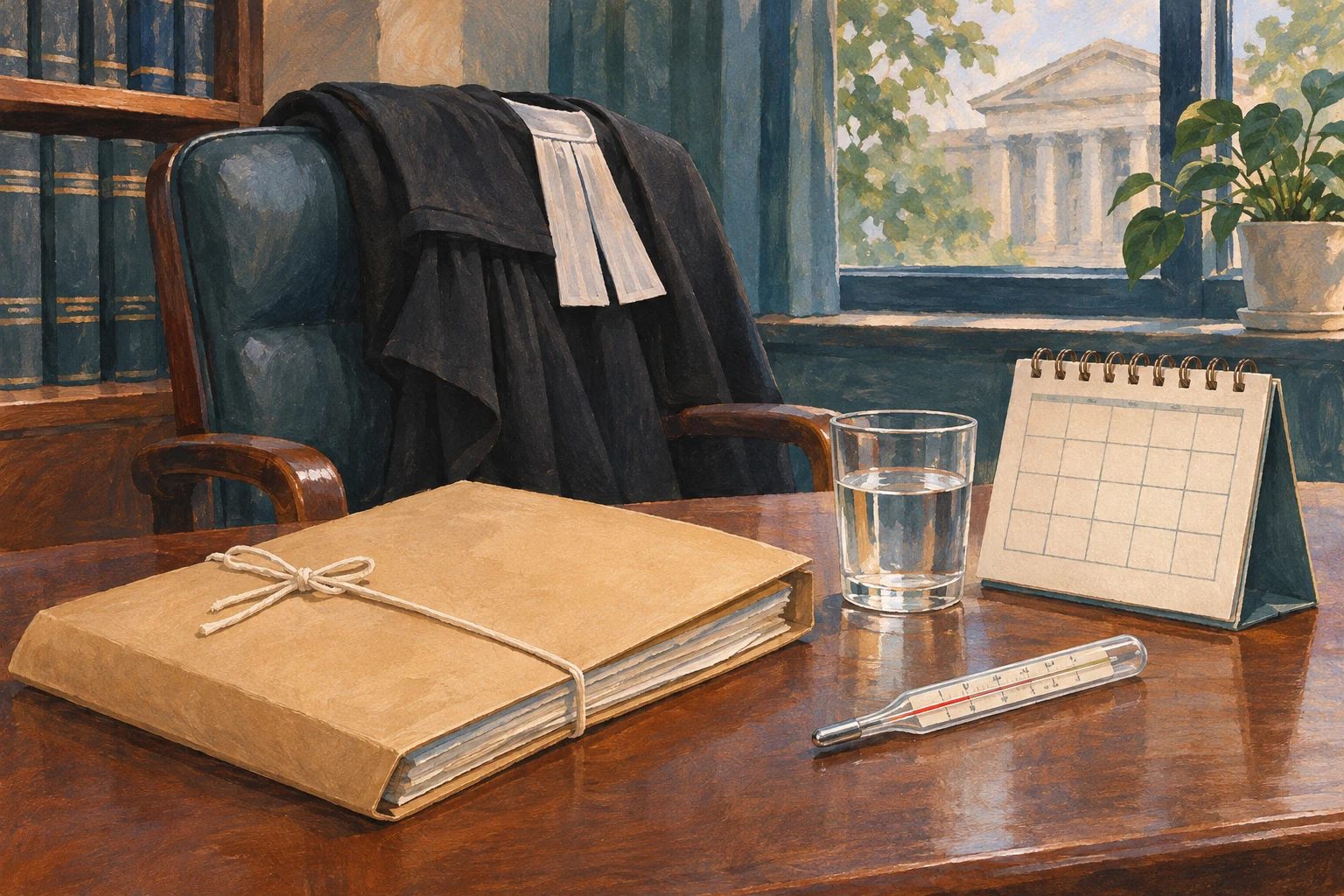
A prompt restoration application supported by a genuine, uncontroverted explanation for counsel's absence deserved a fair hearing in Safdar Ali Butt's case. The Supreme Court of Pakistan restored two civil revisions which the Lahore High Court had dismissed for non-prosecution, while warning that restoration is neither automatic nor a licence for habitual neglect. Judgment, paragraph 5 Paragraphs 8–9.
Justice Muhammad Ali Mazhar wrote the judgment dated 23 July 2026 for a bench also comprising Justices Musarrat Hilali and Shahid Bilal Hassan. Both petitions were converted into appeals and allowed. Restoration was made subject to costs of Rs10,000 in each case. Case particulars Paragraph 15.
An absence followed by applications the next day
Civil Revision Nos. 1717 and 1718 of 2016 were dismissed on 2 February 2026. Safdar Ali Butt applied for restoration on 3 February, explaining that his counsel had coronavirus, remained outside the courtroom, and could not reach the bench through the crowd before the cases were dismissed. The High Court rejected restoration on 23 February 2026. Paragraphs 1 and 3, continuing on page 2.
The contesting respondents objected that the restoration applications had no supporting affidavit. The Supreme Court nevertheless noted that the illness explanation had not been controverted. Nor had the respondents attributed a deliberate attempt to delay the revisions to the petitioner or his counsel. Paragraph 4.
The revisions had been pending since 2016, but age alone did not establish who was responsible for that delay. The record did not show earlier callous conduct, repeated unjustified adjournments or a history making the petitioner responsible for the long pendency. The next-day applications instead demonstrated an intention to pursue the cases. Paragraph 5.
Sufficient cause requires a balanced assessment
The judgment recognises both the duty of diligence and the purpose of restoration. Courts must examine whether sufficient cause explains the absence, whether the application was filed promptly within limitation, and whether the conduct reflects genuine difficulty or deliberate recklessness. Neither dismissal nor restoration should follow mechanically. Paragraph 8.
Physical incapacity and medical emergencies may provide convincing grounds for exercising the court's inherent or discretionary powers. That remains a matter of satisfactory explanation and the demands of justice in the particular case. A party cannot turn every reference to illness into an entitlement to restoration. Paragraph 9.
The ruling also does not dispense generally with affidavits or proof. The absence of an affidavit was raised in this litigation, but the illness itself was not denied and the applications were filed immediately. A restoration plea in another case must stand on its own properly supported facts. That is the practical significance of the Court's assessment of paragraphs 4, 5 and 8. Paragraphs 4–5 Paragraph 8.
Counsel and client both retain responsibilities
The Court's criticism of professional neglect is substantial. Advocates should monitor cause lists, hearing dates and benches, keep clients informed, and protect their interests diligently. Where hearings overlap, counsel should arrange someone to hold the brief or seek an adjournment properly in advance, with information to the other side. Clients, too, must remain attentive to their litigation. Paragraphs 6–7.
Persistent absence calculated to prolong proceedings stands on a different footing from a genuine medical difficulty. The judgment discusses the damage that unjustified default can cause to a client's case and the possibility of professional-misconduct complaints. Those observations explain why leniency cannot be treated as unconditional. Paragraphs 7–8.
Procedure should help resolve the real dispute
The Supreme Court relied on Mrs. Faryal Arif Latif v. Arif Latif, 2025 SCMR 395, and Imtiaz Ahmad v. Ghulam Ali, PLD 1963 SC 382, as discussed in the judgment, for the role of procedure in advancing substantial justice. The point was to permit proper adjudication within the law, rather than allowing a procedural contest to displace the underlying civil dispute. Paragraphs 10–12.
On the facts before it, the Court considered refusal of restoration harsh. Article 10-A's guarantee of fair trial and due process supported giving the petitioner a fair opportunity to pursue the revisions on their merits. Restoration reopened that opportunity; it did not determine the substantive dispute with the Faisalabad Development Authority and the other respondents. Paragraphs 14–15.
Restoration carries costs and attendance conditions
The petitioner must pay or deposit Rs10,000 for each case into the Medical Center account of the Lahore High Court Bar Association at Lahore and produce the receipts before the Registrar of the High Court. The High Court was asked to decide the old revisions expeditiously. The petitioner was specifically directed to ensure representation at every hearing and avoid unnecessary adjournments. The connected stay applications were disposed of. Paragraph 15, continuing on page 8.
For counsel preparing a restoration plea, the useful features of this decision are the immediate filing, the specific explanation, the absence of a demonstrated history of deliberate delay and the willingness to comply with costs and future attendance. Each mattered to the result. Paragraph 5 Paragraphs 14–15.
Related reading: the distinction between review and an appeal and the journal's guide to an ex parte decree and the available remedies.
Sources
- Read the complete Supreme Court judgment.
- Download judgment PDF.
- Case metadata and searchable judgment summary.
Frequently asked questions
Did the Supreme Court restore Safdar Ali Butt's revisions?
Yes. Both petitions were converted into appeals and allowed. The two civil revisions were restored, subject to costs of Rs10,000 in each case. paragraph 15.
Why did the next-day restoration applications matter?
Their prompt filing supported the conclusion that the petitioner wanted to pursue the cases diligently. The explanation concerning counsel's illness was not controverted, and the record did not establish a history of deliberate delay attributable to him. paragraphs 3–5.
Does a lawyer's illness automatically require restoration?
No. The Court required sufficient cause, a satisfactory explanation and attention to limitation. It distinguished genuine incapacity from deliberate or persistent neglect. paragraphs 8–9.
Did the judgment remove the need to support restoration applications with evidence?
No general exemption was created. The respondents objected to the absence of an affidavit, but did not controvert the illness explanation in this case. Counsel should not treat that outcome as permission to leave future applications unsupported. paragraphs 4–5.
Where must the costs be paid?
The petitioner must pay or deposit Rs10,000 for each revision into the Medical Center account of the Lahore High Court Bar Association, Lahore, and produce the receipts before the Registrar of the Lahore High Court. paragraph 15.
Did restoration decide the underlying civil dispute?
No. The High Court must decide the restored revisions on their merits. The petitioner must ensure representation at every hearing and avoid unnecessary adjournments. paragraph 15, continuing on page 8.
Legal issues in this decision
Browse connected case law
New judgment alerts
Follow this court or legal topic
Receive new judgments and analysis about Supreme Court of Pakistan, Civil Law, Legal Profession by email.
Primary-source materials
Verify the underlying law and record
Court documents, statutory provisions, official notifications, government documents, and external official sources relied on or relevant to this article.
Safdar Ali Butt v. Faisalabad Development Authority through its D.G. and others
safdar-ali-butt-cp-903-904-2026.pdf · PDF · 33 KB
Complete Supreme Court judgment dated 23 July 2026
Research integrity
Editorial and source record
- Author
- Shahbaz Shah, Advocate High Court
- Source review
- Checked against the complete judgment
- Sources checked
- November 7, 2026
- Primary materials
- 2 recorded on this page
- Corrections
- No material correction note is recorded.
Independent legal journal
Written and published by Shahbaz Shah
This article forms part of an independent journal focused on practical analysis of Pakistani law, courts, and legal institutions.
About the authorReader feedback
Was this analysis useful?
Choose one response and, if you wish, tell us what should be improved. No name or email is required. See the Privacy Policy.