Share this article
For more judgments and legal updates, follow our WhatsApp channel.
Independently written and published by Shahbaz Shah Legal Journal.
Case reference
Tahir Mustafa v. Additional Sessions Judge
- Court
- Federal Constitutional Court of Pakistan
- Decided
- 3 November 2026
- Uploaded
- 17 November 2026
An old purchase and a mutation did not establish who exclusively possessed the disputed plot when the alleged dispossession occurred decades later. The Federal Constitutional Court relied on that evidentiary gap when it refused to disturb the acquittal in Tahir Mustafa’s complaint under the Illegal Dispossession Act, 2005. The judgment of 3 November was uploaded on 17 November 2026. Complaint background · Possession findings.
The complaint relied on possession traced to 1975
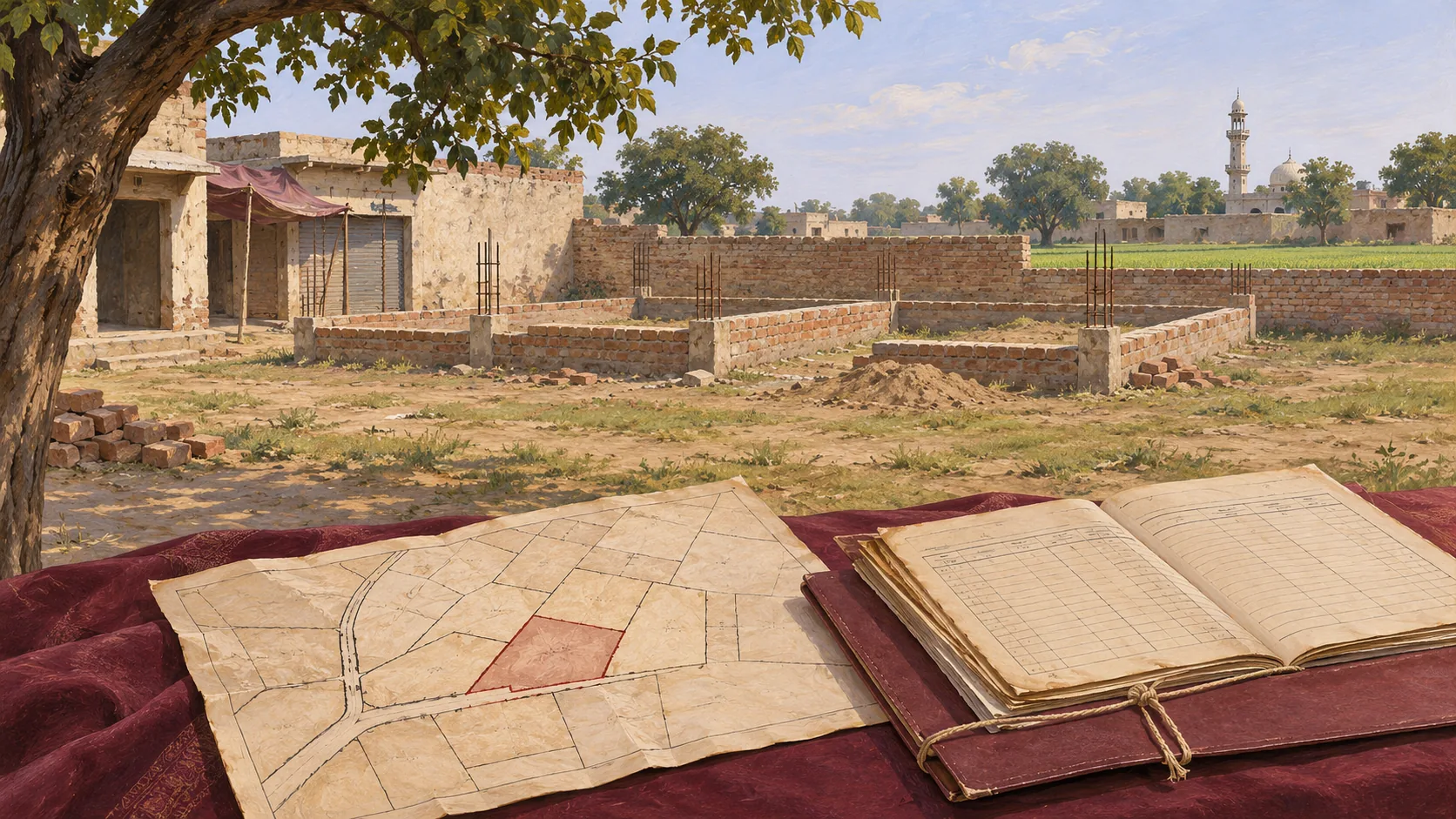
Mustafa’s father and uncles had purchased land in 1975. They obtained a site plan and laid foundations for shops and other construction. The complainant alleged that the respondents entered the property in May 2010, dismantled the foundations and took possession by force. Paragraph 2, continuing on page 2.
The trial court acquitted the respondents. The High Court upheld that result. Before the FCC, the important issue was the evidence tying the claimed historical ownership to exclusive possession at the time of the alleged act. Paragraphs 3–5.
The missing link in the revenue and possession evidence
The record showed other co-sharers in the holding and no completed partition. The Court examined changed khasra numbers, the absence of an inheritance mutation and the lack of adequate proof identifying the complainant’s current possession. The original foundation had not developed into a boundary wall or completed structure. Evidence in cross-examination · Paragraph 6.
The underlying Patwari report referred to in the police inquiry was also absent from the evidence. The FCC regarded that omission as fatal to the account presented. On the record, the essential proof of exclusive possession and its forcible loss was missing. Paragraph 6.
Acquittal and the available possession remedy
The Court also considered the presumption of innocence following acquittal, strengthened by the High Court’s affirmation. It found no reason to interfere and refused leave. The decision therefore turns on the evidence and the acquittal posture of this complaint. Acquittal review, continuing on page 5.
The FCC said Mustafa could seek an appropriate civil or revenue remedy for possession under the law. It did not decide the outcome of any future proceeding. That route would permit the claimed land interest, boundaries and possession to be established before the competent forum. Paragraphs 7–8.
Sources
Complete FCC judgment · Official court PDF · FCC judgment register.
Frequently asked questions
Why did the dispossession complaint fail?
The record did not establish exclusive possession at the time of the alleged 2010 incident or the claimed forcible loss of that possession. Judgment.
Were the 1975 documents enough?
The Court found that they did not establish current exclusive possession, particularly with the gaps in inheritance, demarcation and the changed revenue record. Judgment.
What was missing from the police inquiry material?
The underlying report of the revenue officer or Patwari was neither enclosed nor produced in evidence. Judgment.
What remedy did the Court leave open?
It said the complainant could pursue an appropriate civil or revenue remedy for possession under the law. Judgment.
New judgment alerts
Follow this court or legal topic
Receive new judgments and analysis about Federal Constitutional Court of Pakistan, Criminal Law, Civil Law by email.
Primary-source materials
Verify the underlying law and record
Court documents, statutory provisions, official notifications, government documents, and external official sources relied on or relevant to this article.
Tahir Mustafa v. Additional Sessions Judge, Chiniot and others
fcc-cpla-7-l-2017.pdf · PDF · 102 KB
Official Federal Constitutional Court PDF
FCC judgment register, uploaded 17 November 2026
Research integrity
Editorial and source record
- Author
- Shahbaz Shah, Advocate High Court
- Source review
- Checked against the complete judgment
- Sources checked
- November 18, 2026
- Primary materials
- 3 recorded on this page
- Corrections
- No material correction note is recorded.
Independent legal journal
Written and published by Shahbaz Shah
This article forms part of an independent journal focused on practical analysis of Pakistani law, courts, and legal institutions.
About the authorReader feedback
Was this analysis useful?
Choose one response and, if you wish, tell us what should be improved. No name or email is required. See the Privacy Policy.