Share this article
For more judgments and legal updates, follow our WhatsApp channel.
Independently written and published by Shahbaz Shah Legal Journal.
Case reference
Taimoor Khan v. The State
- Reference
- Criminal Petition No. 172-P/2026
- Decision
- 21 October 2026
- Bench
- Muhammad Hashim Khan Kakar, Salahuddin Panhwar and Ishtiaq Ibrahim JJ.
The Supreme Court of Pakistan has overturned Taimoor Khan’s life sentence in a case alleging recovery of 48 kilograms of charas. Unexplained differences in the exhibited sacks and parcel numbers, combined with gaps concerning the recovered vehicle, left the prosecution unable to establish its case beyond reasonable doubt. Judgment, paragraphs 4–6.
In Criminal Petition No. 172-P/2026, decided on 21 October 2026, the Court converted the petition into an appeal, set aside the judgments below and acquitted the petitioner. Justice Ishtiaq Ibrahim authored the decision for the three-judge bench of Justices Muhammad Hashim Khan Kakar, Salahuddin Panhwar and Ishtiaq Ibrahim. Judgment, case heading and paragraph 6.
The case was prosecuted under Section 9(d) of the Khyber Pakhtunkhwa Control of Narcotic Substances Act, 2019. The judgment concerns proof of this alleged recovery and its custody record; it should not be described as a conviction under Section 9(c) of the federal narcotics statute. Judgment, paragraphs 1–2.
Two sacks, forty packets and a life sentence
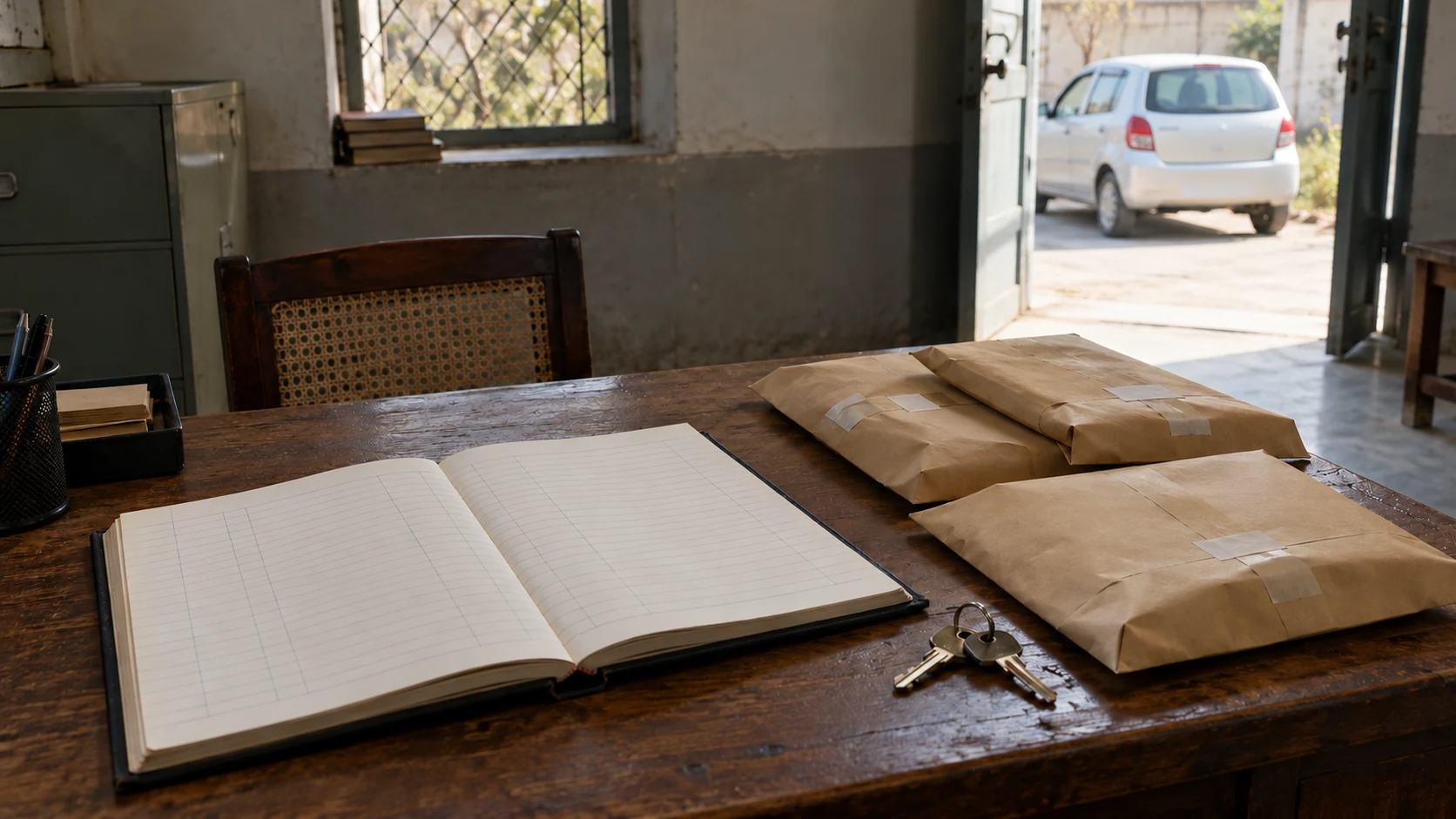
The prosecution alleged that police recovered two sacks from the boot of a Suzuki Alto on 1 December 2023. Each sack allegedly contained twenty packets, each weighing 1,200 grams, making a total of 48 kilograms. Five grams were separated from each packet, producing forty sample parcels numbered 1 to 40. The remaining material was described as sealed in two sacks bearing parcel numbers 41 and 42. Judgment, paragraph 1.
The trial court convicted Taimoor Khan on 18 September 2025 and imposed life imprisonment with a Rs500,000 fine and six months’ simple imprisonment in default. The Peshawar High Court maintained the conviction on 9 April 2026. Before the Supreme Court, the prosecution’s account had to be tested against what was actually produced and documented at trial. Judgment, paragraphs 2–4.
The quantity alleged was substantial. It did not resolve the central evidentiary question: whether the property brought before the court was satisfactorily connected to the property said to have been recovered from the petitioner. The Supreme Court identified unresolved discrepancies in that connection. Judgment, paragraph 4.
The exhibits did not reconcile with the recovery account
On 16 July 2025, the recovery witness produced one sack, exhibited as P-1. The recorded description did not identify forty packets or provide the parcel number. In cross-examination, the witness acknowledged producing one sack rather than two, and the vehicle was not produced. Judgment, paragraph 4.
On re-examination on 21 July, the same witness produced parcels numbered 41 and 43, exhibited as P-2 and P-3. The original account had identified the two residual sacks as parcels 41 and 42. The first exhibit, P-1, was neither withdrawn nor cancelled, and there was no satisfactory explanation of repacking or resealing. Judgment, paragraph 4.
This left three exhibits against an original account of two sacks. The Court found that the record did not clarify the relationship between the first sack and the later parcels or satisfactorily establish the identity of the alleged recovered property. The discrepancy was therefore substantive, rather than merely a harmless variation in wording. Judgment, paragraph 4.
The judgment does not require a news report to assert that a particular officer deliberately substituted narcotics. Its conclusion is that the prosecution did not remove the material uncertainty. A failure of proof and a separately proved act of fabrication are different findings. Judgment, paragraphs 4–6.
Register No. 19 was produced, but the car entry was missing
The Court identified a further discrepancy concerning the Suzuki Alto. The car was not produced or exhibited at trial. The prosecution also did not produce a judicial order authorising its release on superdari or another form of release or disposal. Judgment, paragraph 5.
An extract from Register No. 19 was produced. It contained entries concerning the case property, samples and a USB associated with the vehicle, but it did not contain an entry showing deposit of the actual recovered car. It would be inaccurate to report that the register itself was never produced. Judgment, paragraph 5.
The USB entry did not answer the Court’s concern about custody and production of the physical vehicle. The judgment did not, on that basis, declare the USB fabricated or announce a general exclusionary rule for video evidence. The point was the unexplained absence of the vehicle from the custody record and trial exhibits. Judgment, paragraph 5.
The Court considered the defects together
The decision rests on the combined effect of the inconsistent case-property production and the vehicle-related omissions. The Court concluded that the deficiencies created reasonable doubt about the prosecution account and the integrity of the asserted recovery. Judgment, paragraphs 4–6.
That reasoning should not be shortened into an automatic rule that every missing vehicle, every clerical error or every difference in a parcel number requires acquittal. Here, the prosecution failed to reconcile material discrepancies affecting the identity and documented handling of central exhibits. Judgment, paragraphs 4–6.
For counsel examining a recovery case, the practical lesson is to trace each exhibit from the recovery description through sealing, custody entries and production in court. The first production, any later re-examination, exhibit numbers and release orders should be compared directly. These preparation points follow from the specific defects identified in paragraphs 4 and 5. Judgment, paragraphs 4–5.
The life sentence was set aside
The Supreme Court allowed the converted appeal and set aside both lower judgments. It acquitted Taimoor Khan by extending the benefit of doubt and directed his release if he was not required in another case. The decision is an acquittal on the criminal charge, rather than a bail order or a remand for the prosecution to repair the missing proof. Judgment, paragraph 6.
Frequently asked questions
What was the outcome of Taimoor Khan’s petition?
The Supreme Court converted the petition into an appeal, allowed it, set aside the lower judgments and acquitted Taimoor Khan by giving him the benefit of doubt. Release was directed if he was not required in another case. Judgment, paragraph 6.
Was the case under the federal narcotics statute?
The judgment identifies Section 9(d) of the Khyber Pakhtunkhwa Control of Narcotic Substances Act, 2019. It should not be relabelled as a federal Section 9(c) conviction. Judgment, paragraphs 1–2.
What was the discrepancy in the case property?
The alleged recovery was described as two sacks. One sack was first exhibited as P-1; later, parcels 41 and 43 were exhibited as P-2 and P-3. The first exhibit was not withdrawn or explained, and the later production did not satisfactorily reconcile the property with the original recovery record. Judgment, paragraph 4.
Was Register No. 19 produced before the court?
Yes. An extract was produced. The Court’s concern was that it had entries for the case property, samples and a USB concerning the vehicle, but no entry establishing deposit of the actual recovered car. Judgment, paragraph 5.
Does every failure to produce a vehicle require acquittal?
The judgment did not announce that automatic rule. It assessed the absent vehicle, missing custody entry, lack of a judicial release or disposal order and unexplained parcel discrepancies together. Judgment, paragraphs 4–6.
Did the Court find that the narcotics had definitely been substituted?
The Court found that the prosecution had not removed material uncertainty about the recovered property. An acquittal on that basis should not be reported as a separate finding that a particular officer deliberately substituted or fabricated it. Judgment, paragraphs 4–6.
Sources and complete judgment
This analysis is based on the complete 5-page supplied judgment in Taimoor Khan v. The State, Criminal Petition No. 172-P/2026, decided 21 October 2026. The downloadable PDF is a labelled, searchable reference copy prepared from that text, preserving the source page order. It is not a certified copy or an official court-issued PDF. An independently accessible official copy was not located during this review.
- Read the complete judgment reference copy.
- Download the complete judgment reference copy.
- Case particulars, legal questions and judgment summary.
Paragraph 4 analyses the sacks, parcel numbers and exhibits; paragraph 5 addresses the vehicle and Register No. 19; paragraph 6 contains the acquittal and conditional release direction.
Legal issues in this decision
Browse connected case law
New judgment alerts
Follow this court or legal topic
Receive new judgments and analysis about Supreme Court of Pakistan, Criminal Law, Evidence by email.
Primary-source materials
Verify the underlying law and record
Court documents, statutory provisions, official notifications, government documents, and external official sources relied on or relevant to this article.
Taimoor Khan v. The State
Taimoor Khan - Full Judgment Reference Copy.pdf · PDF · 13 KB · Not an official court-issued PDF
Research integrity
Editorial and source record
- Author
- Shahbaz Shah, Advocate High Court
- Legal review
- Author-reviewed
- Sources checked
- November 2, 2026
- Primary materials
- 1 recorded on this page
- Corrections
- No material correction note is recorded.
Independent legal journal
Written and published by Shahbaz Shah
This article forms part of an independent journal focused on practical analysis of Pakistani law, courts, and legal institutions.
About the authorReader feedback
Was this analysis useful?
Choose one response and, if you wish, tell us what should be improved. No name or email is required. See the Privacy Policy.