Share this article
For more judgments and legal updates, follow our WhatsApp channel.
Independently written and published by Shahbaz Shah Legal Journal.
Case reference
Case reference
- Case
- Matin Shankarrao Bhosale and Another v. State of Maharashtra and Another
- Reference
- 2026 INSC 1198 · 2 November 2026
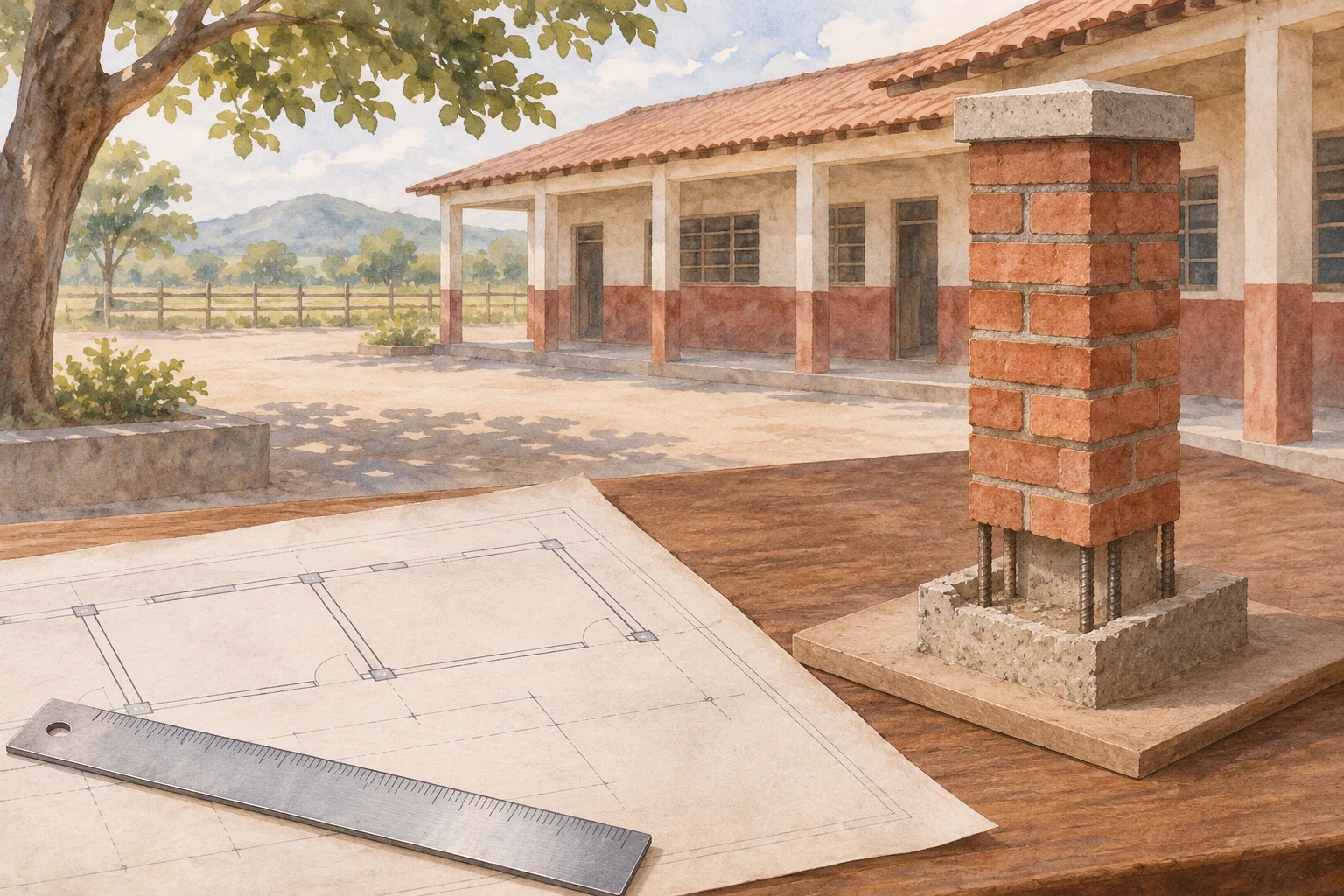
The Supreme Court of India has quashed a homicide prosecution against the President and Superintendent of a residential school after a twelve-year-old pupil died beneath a collapsing pillar. The Court held that their alleged failure to supervise construction did not, on the material before it, establish either the mental element for culpable homicide or the direct causation needed for criminal negligence. Order, paragraphs 39–44 and 59–63.
The reportable order in Matin Shankarrao Bhosale v. State of Maharashtra was delivered on 2 November 2026 by Justice J.B. Pardiwala, sitting with Justice Manmohan. The Supreme Court’s official judgment list records its upload on 5 November. Relief is confined to the two appellants; proceedings against any other co-accused may continue. Order, paragraphs 62–63 · Official judgment list.
The case brought by the pupil’s father
The pupil was studying in the seventh standard at an Adivasi residential school in Amravati district. Her father’s complaint alleged that a pillar built with substandard material collapsed, causing fatal injuries to her and injuries to other girls. Police filed a charge sheet against the appellants under Section 304 read with Section 34 IPC. The two appellants held the posts of school President and Superintendent. Paragraphs 2–12.
The High Court refused to quash the prosecution. It relied on the construction material and the absence of a proper base, treating the alleged breach of the administrators’ duty as enough to continue the case. Before the Supreme Court, the State maintained that these matters could be tested at trial and argued that at least a Section 304A charge should proceed. Paragraphs 15 and 22–24.
Why Section 304 was not made out against the appellants
The Court distinguished culpable homicide under Section 304 from causing death by negligence under Section 304A. Section 304 requires the applicable intention or knowledge concerning death or the relevant injury. A tragic result does not itself supply that mental element. Paragraphs 27–38.
Applied here, the alleged failure to ensure a proper standard of construction did not establish that these administrators knew inferior construction was likely to cause a pupil’s death. The contractor and his team were carrying out the work. The Court held that the alleged supervisory lapse did not disclose the culpable homicide case asserted against the two appellants. Paragraph 39.
Section 304A required a closer causal connection
The State’s alternative argument required a separate answer. The absence of intention or knowledge sufficient for Section 304 does not, by itself, settle a Section 304A allegation. The Court therefore examined both the degree of negligence and whether the administrators’ own alleged omission directly caused the death. Paragraphs 40–45.
The order explains the difference between an effective, immediate cause and a condition that merely forms part of the background. In the Latin terms discussed in the judgment, Section 304A requires causa causans, rather than merely causa sine qua non. There must be the required proximate causal link, alongside culpable or gross negligence. Paragraphs 41–43 and 51–56.
The Court found that link missing as to these appellants. The contractor and his team were actually undertaking the construction, and their intervention broke the chain between the alleged administrative lapse and the death. The administrators’ failure to take care might form part of the circumstances, but the Court did not regard it as the immediate and effective cause on this record. Paragraphs 44 and 59–60.
Criminal negligence requires more than a civil lapse
The order also distinguishes a failure that may justify compensation from negligence serious enough to attract criminal punishment. The degree of culpability, the risk taken and the surrounding circumstances matter. A breach of a rule or duty cannot establish criminal liability without the necessary degree of negligence and causation. The gravity of the injury does not remove those requirements. Paragraphs 45–58.
The Court drew on its decisions in Kurban Hussein, Ambalal D. Bhatt and other authorities, as discussed in the order. These were used to explain why identifying some failure in a chain of events is different from establishing the accused’s criminal responsibility for the death. Paragraphs 42–43 and 56.
For readers following the distinction between civil and criminal negligence, the journal also examines Pakistan’s separate statutory setting in Amjad Ali’s medical negligence case. That report concerns Pakistani law and a different factual setting.
The limits of the relief
The Supreme Court quashed proceedings arising from Chargesheet No. 15 of 2020 only against the two appellants. It allowed any case against other co-accused to continue according to law. Its discussion of the contractor’s potential responsibility was expressly prima facie and subject to evidence at trial, if the contractor was an accused. It was not a conviction of the contractor. Paragraphs 59 and 62–63.
The ruling depends on the roles, alleged acts and causal evidence before the Court. It does not exempt school management from criminal liability in every construction accident. Its practical lesson is to examine each accused’s conduct, the mental element for the charged offence, the degree of negligence and the causal connection before treating a fatal accident as a criminal case against that person. Paragraphs 39–45 and 59–63.
Sources and case reference
- Searchable judgment summary and full case details.
- Complete Supreme Court of India PDF, 44 pages.
- Supreme Court of India judgment collection.
Frequently asked questions
Who obtained relief from the Supreme Court?
The two appellants, identified in the order as the school’s President and Superintendent. The proceedings were quashed only against them. Order, page 43.
What was the difference between the Section 304 and Section 304A issues?
Section 304 required the relevant intention or knowledge. Section 304A instead required culpable rashness or gross negligence directly and proximately causing death. The Court examined both separately. Order, page 22.
Why was the alleged supervisory failure insufficient here?
The Court found it did not establish the mental element for Section 304 and was not the immediate effective cause required by Section 304A, given the contractor’s intervening construction work. Order, page 25.
Did the Court convict the contractor?
No. The observation about the contractor was prima facie and subject to trial evidence, if he was also an accused. Proceedings against any other co-accused could continue according to law. Order, page 43.
Are school administrators always protected from criminal negligence charges?
No blanket protection was given. The order turns on these appellants’ roles, the available material, the degree of negligence and the causal link to the death. Order, page 22.
Was the order decided or uploaded on 5 November?
It was decided on 2 November 2026. The Supreme Court’s official judgment list recorded its upload on 5 November 2026. Order, page 44. Official upload listing.
New judgment alerts
Follow this court or legal topic
Receive new judgments and analysis about Supreme Court of India, Criminal Law, Evidence by email.
Primary-source materials
Verify the underlying law and record
Court documents, statutory provisions, official notifications, government documents, and external official sources relied on or relevant to this article.
Matin Shankarrao Bhosale and Another v. State of Maharashtra and Another
matin-bhosale-2026-insc-1198.pdf · PDF · 393 KB
Official Supreme Court of India PDF
Research integrity
Editorial and source record
- Author
- Shahbaz Shah, Advocate High Court
- Legal review
- Author-reviewed
- Sources checked
- November 5, 2026
- Primary materials
- 2 recorded on this page
- Corrections
- No material correction note is recorded.
Independent legal journal
Written and published by Shahbaz Shah
This article forms part of an independent journal focused on practical analysis of Pakistani law, courts, and legal institutions.
About the authorReader feedback
Was this analysis useful?
Choose one response and, if you wish, tell us what should be improved. No name or email is required. See the Privacy Policy.